The Eastern Lake Ontario Regional Conservation Authority (ELORCA) is the regional conservation authority being established through Ontario’s consolidation of conservation authorities. It is the regional authority that will bring together Kawartha, Cataraqui, Crowe Valley, Ganaraska, Lower Trent, Otonabee and Quinte conservation authorities.
Local programs and services will continue, including flood forecasting and warning, permit review, stewardship, watershed monitoring and conservation area management. You can continue to access these services through Kawartha Conservation and the local staff who support our communities. This page will provide updates on the work to bring the participating conservation authorities together.
Working together across Eastern Lake Ontario
What is ELORCA? Eastern Lake Ontario Regional Conservation Authority
What is ELORCA?
The Eastern Lake Ontario Regional Conservation Authority (ELORCA) is a new regional conservation authority being established as part of Ontario's transition to a regional conservation authority model.
ELORCA will bring together seven conservation authorities, including Kawartha Conservation, to serve communities, landscapes and waterways stretching from the Kawartha Lakes to Brockville.
Kawartha Conservation is working alongside six neighbouring conservation authorities to support a smooth, successful transition. Together, the seven authorities are bringing their local knowledge, scientific expertise and decades of watershed management experience to a coordinated regional approach that continues to recognize the unique needs of local communities and watersheds.
The transition is scheduled for February 1, 2027. Throughout this process, Kawartha Conservation remains committed to delivering essential services, supporting healthy watersheds and keeping residents, municipalities and partners informed.
Last Updated: November 11, 2026
Need a service today?
Local programs and services will continue without interruption through consolidation. Continue to contact Kawartha Conservation for assistance as you do today.

Apply for a permit
For a property within Kawartha Conservation’s jurisdiction, continue to contact our permitting team and use our existing application process on our website.

Purchase a parking pass
For parking at a Kawartha Conservation conservation area, continue to use the parking information and purchase options provided on our conservation area pages.

Contact our team
Have a question about a Kawartha Conservation program, service or property? Contact our team for information and help finding the right person to assist you.
A region connected by water and landscape
The ELORCA region extends across a diverse landscape, from the Kawartha Lakes through the Peterborough and Trent River areas, along eastern Lake Ontario and the Bay of Quinte, and east through the Cataraqui area toward Brockville.
It brings together inland lakes, rivers, wetlands, forests, farmland, growing communities and shoreline environments. Across this geography, local watershed knowledge will help inform coordinated work at the regional scale.
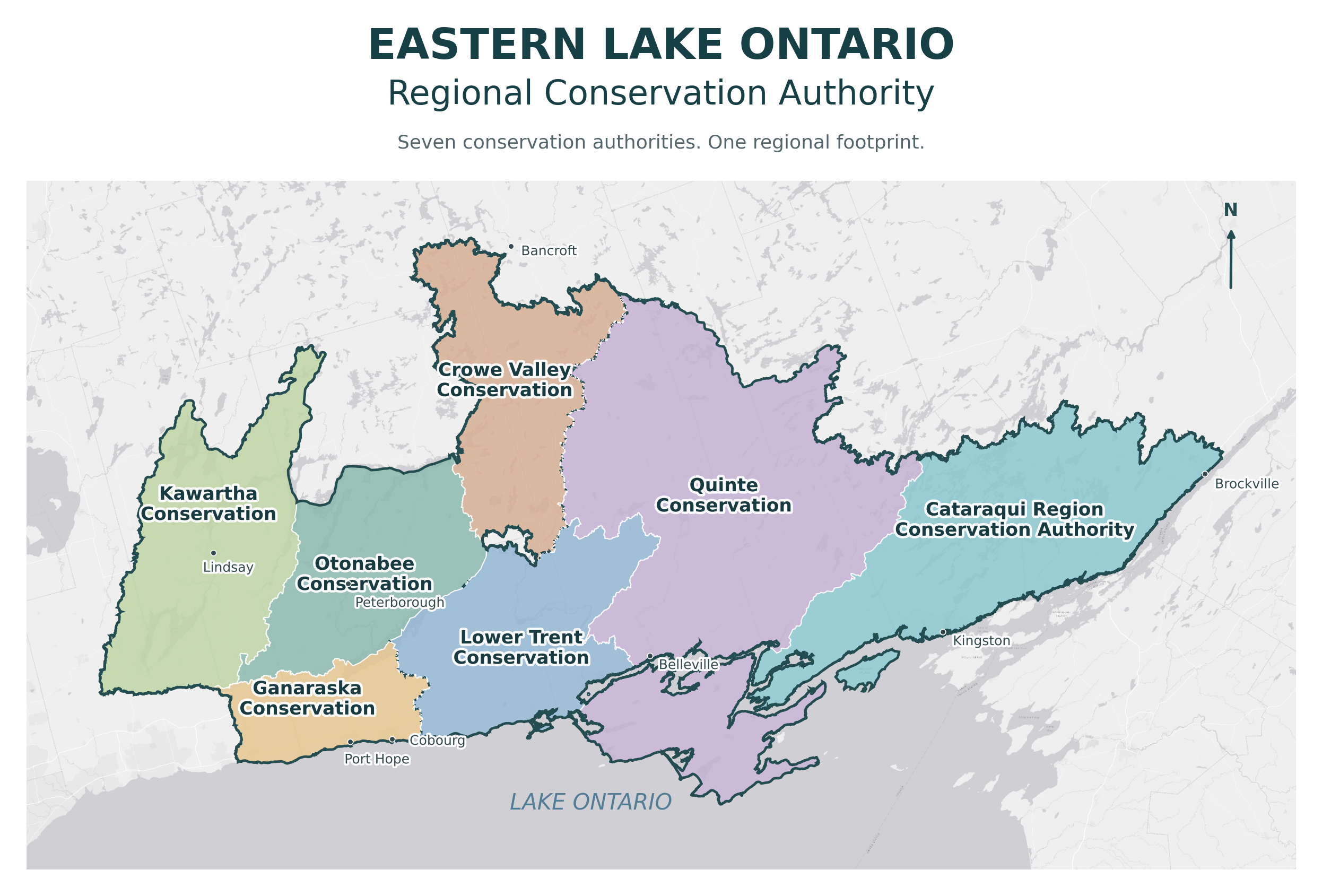
Map of the Eastern Lake Ontario Regional Conservation Authority showing Kawartha, Otonabee, Ganaraska, Lower Trent, Quinte, Crowe Valley and Cataraqui Region conservation authority areas.
Connected waterways. Shared expertise. Local knowledge.
Water connects communities across the region. The Trent-Severn Waterway is one important example, linking lakes and rivers through communities such as Fenelon Falls, Lindsay, Bobcaygeon, Lakefield, Peterborough, Hastings, Campbellford and Trenton.
The seven conservation authorities bring experience in understanding local water conditions, managing natural hazards, protecting conservation lands and supporting watershed health. Working together creates opportunities to share knowledge, coordinate monitoring and planning, and respond to challenges that extend across existing organizational boundaries.
Regional collaboration can support a broader view of these challenges while keeping the distinct needs of individual watersheds and communities at the centre of the work.
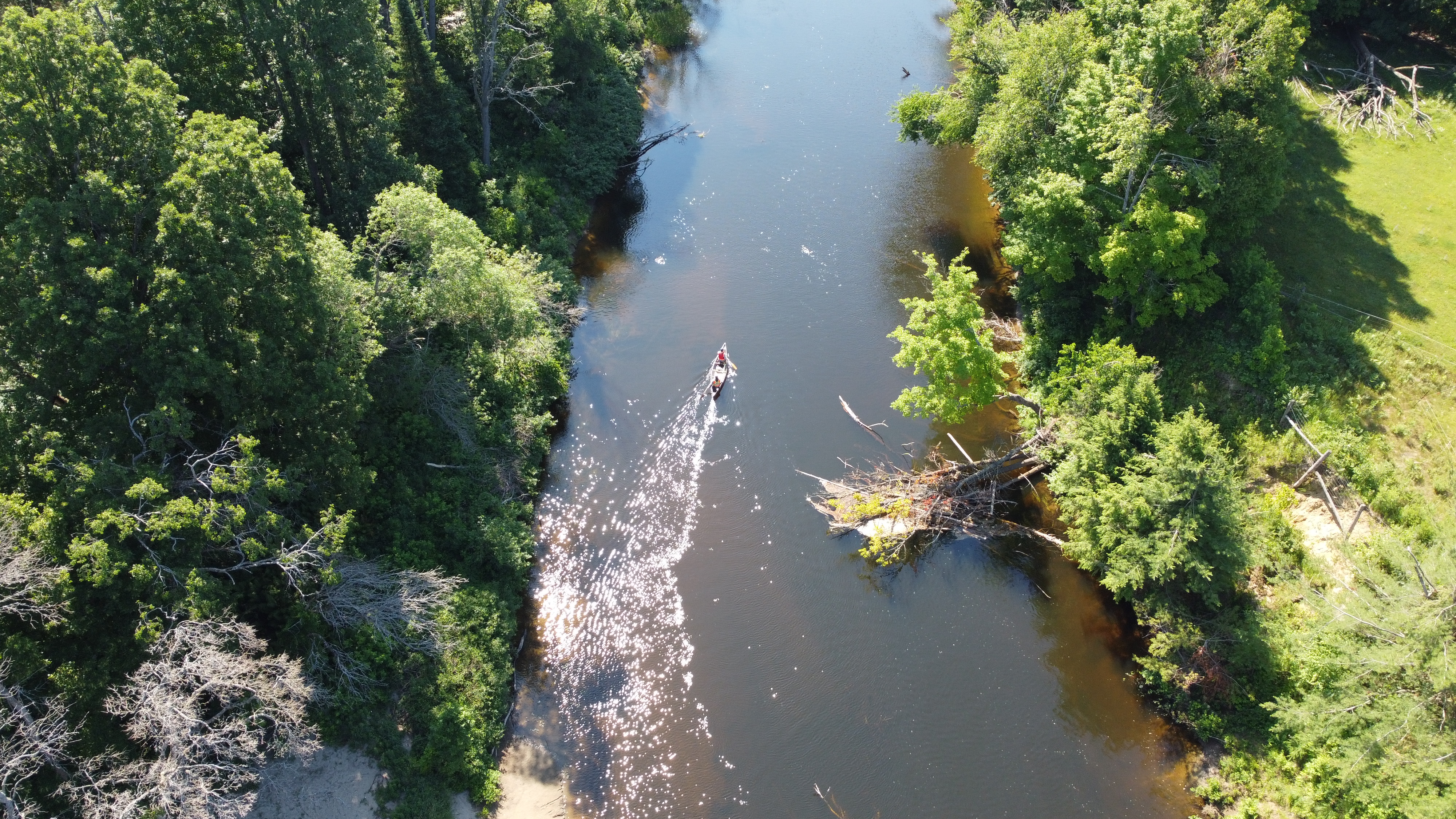
Seven conservation authorities working together
Explore the conservation authorities
Frequently asked questions
Why are conservation authorities consolidating, and how will this benefit our region?
The Government of Ontario has directed the consolidation of Ontario’s 36 conservation authorities into nine regional organizations to strengthen watershed management and provide more consistent services.
For our region, bringing conservation authorities together creates opportunities to share scientific and technical expertise, improve access to technology and resources, and coordinate work that protects communities from flooding and other natural hazards.
This work will build on the local knowledge, relationships and conservation efforts already established across the region. Local programs and services will continue, with a shared focus on protecting people and property, supporting healthy watersheds and meeting the needs of our communities today and into the future.
How will municipal dollars be distributed and how are local projects going to be funded?
The existing 2027 budgets are the starting point, and approved projects and funding commitments are expected to continue. The combined budgets will still need careful review, and some decisions may be needed to meet regional priorities.
The 2028 budget will be the first developed under the regional model. How municipal contributions are shared and local projects are funded is still being worked through. The aim is to keep local watershed priorities reflected in those decisions while coordinating investments across the region.
Are project funds coming from one big pot or through each municipal partner?
For 2027, existing funding arrangements remain in place. Projects will continue to draw on municipal contributions, grants and other approved funding sources. Municipalities will receive levy notices as they do today.
From 2028, notices setting out municipal contributions will go to participating upper-tier and single-tier municipalities. Counties and regions will have flexibility in allocating costs among their lower-tier municipalities. The details of project funding under the regional model are still being developed with municipal partners.
I am planning a project. Where do I find out whether I need a permit, and how do I apply?
If your property is within Kawartha Conservation’s jurisdiction, continue to apply through Kawartha Conservation. Visit our Apply for a Permit page for the application process and contact information.
Our Apply for a Permit page explains the application process, submission requirements and fees. If you are at the planning stage, a pre-consultation meeting can help identify what you need before submitting an application. Contact permits@kawarthaconservation.com or call 705-328-2271.
How do I find out whether my property is in a regulated area or floodplain?
Start with our Property Mapping page, which links to interactive mapping showing regulated areas, including floodplains, and source water protection areas.
For questions about a particular property, contact Kawartha Conservation. Staff can help explain the available mapping and identify whether you should request property information or arrange a pre-consultation meeting. Checking early is particularly helpful when buying a property or planning construction, landscaping or shoreline improvements.
I already have an application underway. Who should I contact?
Continue working with the Kawartha Conservation staff member handling your application. Submit requested information and direct questions about your file to that person, or email permits@kawarthaconservation.com.
If you already hold a permit, follow its conditions and expiry date. Contact our permitting team before changing your project or if you need advice about completing the work within your permit’s timeframe. You do not need to wait for the regional transition to seek assistance or move forward through the application process.
Where can I find flood information, and who should I contact during a flood?
Kawartha Conservation continues to monitor watershed conditions and issue flood messages to help residents and municipalities prepare. Visit our Flood Forecasting and Warning page for current messages, explanations of flood watches and warnings, and information on subscribing to email alerts.
For local flood response assistance, including information about road closures, sandbagging or evacuation, contact your municipality. If someone is in immediate danger, call 911. You can also contact Kawartha Conservation to report flooding or ask about watershed conditions.
Where can I find information about low water levels and drought?
Visit our Low Water and Droughts page for information about watershed conditions, low water levels and ways to conserve water. You can also subscribe to receive low water messages.
Kawartha Conservation monitors precipitation and water conditions and coordinates the local Water Response Team, bringing together municipalities, water users and provincial partners to support a coordinated response. Check your municipality’s website for any local watering restrictions.
Can I still get help with tree planting, shoreline improvements or stewardship projects?
Yes. Continue to contact Kawartha Conservation for advice and support for projects that improve local land and water.
Our Landowner Services include tree planting, shoreline and erosion advice, farm stewardship and information about financial assistance through programs such as the Water Fund and ALUS Kawarthas, Peterborough, Northumberland. Staff can help you explore suitable options, eligibility requirements and application periods. Contact us early when planning a project so we can help identify available support and any approvals you may need.
Where do I purchase a parking pass?
Continue to use Kawartha Conservation’s existing parking purchase options for our conservation areas. Visit the relevant conservation area page for instructions.
Will my parking pass work at other authorities’ conservation areas?
Kawartha Conservation’s current annual parking pass is described as covering Kawartha Conservation conservation areas. Check with the authority operating another site before visiting. Any confirmed changes to regional pass arrangements will be added here.
Where do I go for service, current fees or help finding the right person?
Continue to use Kawartha Conservation’s website and local office for services within our watershed. Our office is at 277 Kenrei Road, Lindsay, and our main telephone number is 705-328-2271.
Current fees, forms and service information are available on the relevant service pages. Our Contacts Directory can help you reach the right team. If you are unsure where to start, call our main number and we will direct your question. Local programs and services continue during the transition.
If I make a donation to Kawartha Conservation will it stay local?
Any donation made to Kawartha Conservation, whether a financial contribution or a donation of land, will remain with Kawartha Conservation and be used locally. Donations will continue to support conservation initiatives, projects and priorities within the Kawartha Conservation watershed, ensuring your contribution directly benefits the local environment and communities you care about.
When will the transition take place?
The Conservation Authorities Act defines the transition date as February 1, 2027, or a later date prescribed by regulation. We will share transition updates and progress on this page and through our regular communications channels.
Will fees, office locations or contact details change?
Local programs and services are not changing as a result of consolidation. Continue to use the fees, office locations and contact details listed on your local conservation authority’s website.
How can I follow the transition and learn what ELORCA will mean in the future?
This page will provide transition updates, explain progress and answer questions about ELORCA as the regional organization takes shape.
We will continue adding information about regional governance, transition milestones and how the participating conservation authorities are working together to support local watersheds and communities. You can also follow Kawartha Conservation’s news and subscribe to the Watershed Watch newsletter. If your question is not answered here, contact us so we can help and use recurring questions to improve these FAQs.
Board procedures and hearing arrangements are still being developed, so there is no confirmed answer yet on where hearings will take place or how residents will participate. Other conservation authorities have hearing committee models that can help inform that work.
Staff will be asked to identify plan review, permitting, hearing and judicial files. A small team will use this information to document the status of existing files and identify any matters requiring particular attention during the transition.
No decision has been made on whether the current conservation authorities will become districts, or on long-term office names and branding. Local offices and watershed connections will remain important, with a strong local presence expected on February 1.
ELORCA's identity will take shape over time, drawing on the history and expertise of the seven organizations and the people they serve. The new Board's strategic planning work will help guide that direction.
Effective February 1, 2027, individual properties within each of the seven conservation authorities will continue to operate as they currently do, including existing parking arrangements. No immediate changes are planned.
Over time and together, staff will explore ways to enhance the management, stewardship, and develop best practices for all of our conservation authority properties throughout the region.
How will this transition affect the friends’ groups?
Friends groups and other community partners play an important role in supporting conservation authority programs, properties, and communities. Existing relationships and volunteer efforts will continue following consolidation. Over time, ELORCA will work with these groups to strengthen partnerships, share best practices, and identify opportunities for greater collaboration across the region.
What will happen to Conservation Ontario (CO)?
Conservation Ontario will continue to operate as the provincial association representing Ontario's conservation authorities through 2027. Conversations are on-going to see how CO will work with the Ontario Provincial Conservation Agency and the Regional Conservation Authorities. CO provides significant value to conservation authorities through provincial advocacy, policy coordination, training and professional development, shared technical expertise, guidance on legislative and regulatory changes, and opportunities for collaboration on programs and best practices. ELORCA will continue to work closely with CO to ensure staff, municipalities, and watershed communities benefit from consistent, coordinated approaches to conservation authority programs and services across the province.
Different CAs apply different planning policies. Will this change?
Yes, improving consistency is one of the potential benefits of a regional conservation authority. While existing policies and processes will continue initially, ELORCA will have the opportunity over time to review planning and permitting approaches across the seven former conservation authorities and work toward a more consistent and predictable experience for municipalities and applicants while maintaining legislative requirements and watershed-specific considerations.
Questions about a Kawartha Conservation service?
Contact our team for assistance with permits, conservation areas, parking or other local services.
Contact Kawartha Conservation View provincial transition information
Subscribe to Receive Updates and Notifications
Stay up to date on flood and low water, news, activities, events, programs and operations by subscribing to updates and the Watershed Watch Newsletter.